
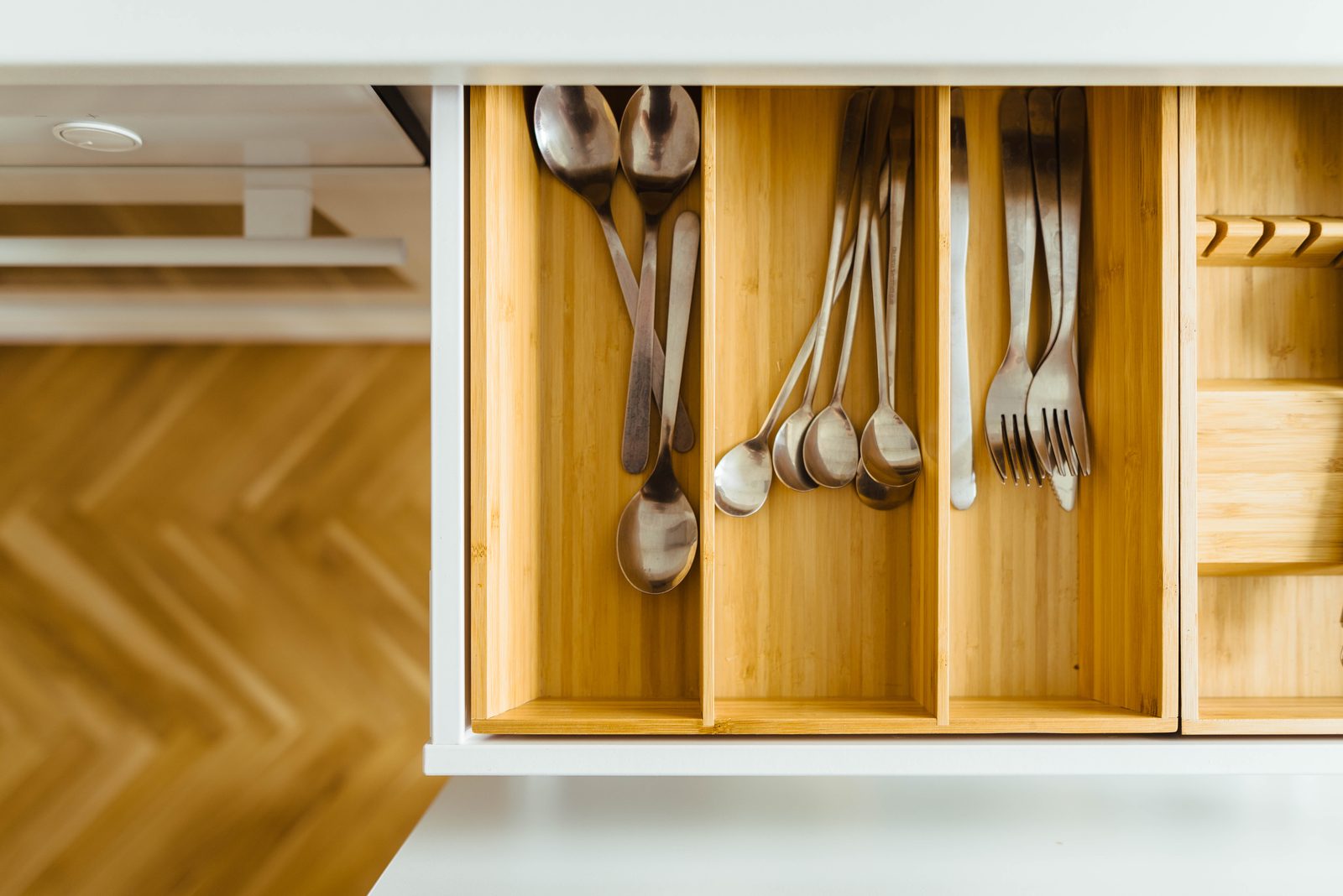
Real Wood, Not a Picture of Wood
Wood veneer is exactly what it sounds like: thin sheets of real wood, sliced from actual logs, applied to your cabinet frames. It has grain you can see and feel, color variation that shifts in the light, and the warmth that only real wood has. When your frames are wrapped in oak veneer and hung with oak doors in the same stain, the result is indistinguishable from all-new wood cabinets — because everywhere you can see, it is wood.
This is the refacing choice for people who want wood and mean it. Not a printed pattern, not a solid color — the real material, with all its character. If you love the look and feel of natural wood grain, veneer refacing gives it to you without tearing out cabinets that are already solid.
How Veneer Works on Your Frames
The process is precise hand work. We start by preparing your frames — cleaning them thoroughly and sanding smooth so the veneer bonds perfectly. Then each piece of veneer is cut to fit its frame section: the stiles, the rails, the exposed end panels. We apply it with adhesive, press it firmly to eliminate any air bubbles, and trim it flush at the edges. Seams are placed where they are least visible, and the grain is matched across adjacent pieces so the frame reads as one continuous piece of wood.
Then the finish: the veneer is stained to your chosen tone and sealed with a protective topcoat, matched to your new wood doors. The doors themselves are real wood — typically the same species as the veneer — so the grain and color work together across the whole kitchen. Done right, you cannot tell where the original frame ends and the new wood begins. That invisible transition is the mark of a proper veneer job.
Wood Species to Choose From
The most popular veneer species we install are the classics. Oak — red or white — has the prominent grain that suits traditional kitchens and matches the many oak kitchens already in Alexandria homes. Maple is smoother and more uniform, taking stain evenly for a clean, calm look; it is the go-to for Shaker kitchens. Cherry starts a warm reddish-brown and deepens beautifully with age, giving a rich traditional feel. Walnut, with its dark chocolate tones and striking grain, makes a statement in modern and transitional kitchens.
Each species takes stain differently, and that is part of the conversation during your visit. We bring real samples — not photos — so you can see the grain, feel the texture, and hold each option against your counters and floors in your own light.
Veneer vs. Laminate: An Honest Comparison
We install both wood veneer and laminate, so we can be straight about the trade-offs. Veneer is real wood: it has depth, variation, and a feel that laminate cannot fully copy. It can also be touched up and, in some cases, lightly refinished years down the road. Laminate is more uniform, extremely durable, easier to clean, and usually costs less. It comes in wood looks, solid colors, and modern textures.
Choose veneer if you want the real thing and appreciate natural variation — no two kitchens look exactly alike. Choose laminate if you want maximum durability, a specific modern color, or the most budget-friendly reface. Neither is "better" in the abstract; they are better for different homeowners. Our veneer vs. laminate vs. paint guide goes deeper.
Where Veneer Makes the Most Sense
Veneer refacing is at its best in kitchens where wood belongs: traditional colonials, historic homes, and any kitchen where the homeowner wants warmth rather than a painted look. It is also the right choice when you are keeping some existing wood elements — say, a wood island or built-in shelving — and want the refaced cabinets to sit alongside them naturally. Matching real wood to real wood is something only veneer does convincingly.
It is also ideal for furniture-quality details: a china cabinet wall, a built-in bar, or glass-front uppers where the wood frame is highly visible. In those spots, the real grain shows and the investment pays off visually.
How It Works: Our Process
Step 1 — Free visit. We check your frames, talk species and stain, and bring real wood samples.
Step 2 — Choices and measuring. Species, stain color, door style, hardware. Every surface measured.
Step 3 — Written estimate. Veneer, wood doors, finish, hardware, and labor. Every project is different — contact us for a free written estimate.
Step 4 — Install days. Frames prepped and veneered, wood doors hung, everything stained and sealed to match. Most kitchens take four to six working days.
Step 5 — Walkthrough. We review the grain match and finish with you in your kitchen light.
Caring for Wood Veneer
Treat it like fine wood furniture, because that is what it is. Dust with a soft cloth, clean with mild soap and water, dry after wiping. Keep excessive water away from seams and edges. Avoid harsh chemicals and abrasives. Sunlight will gently change the tone of some species over time — cherry darkens notably — which most wood lovers consider a feature, not a flaw.
What to Know Before You Choose Veneer
Two honest notes. First, real wood varies — the grain pattern on your frames will not be identical piece to piece, and the color can shift subtly with light and age. If you want perfect uniformity, laminate or paint will make you happier. Second, veneer is premium work: the material costs more and the installation takes more skill and time. What you get for that is a kitchen that is genuinely wood, inside the look and out.
Call (301) 679-9193 or send the form below for your free on-site estimate.